Differentiation
Why CHAXU
How autonomous aerial security infrastructure differs from traditional drone systems and why organizations protecting critical infrastructure deploy CHAXU.
How autonomous aerial security infrastructure differs from traditional drone systems and why organizations protecting critical infrastructure deploy CHAXU.
Most drones require manual piloting, have limited flight time, and operate as isolated platforms. This creates fundamental limitations for security applications.

Traditional drones require trained pilots for every flight. This creates scheduling constraints, labor costs, and limits coverage to when pilots are available.
Short battery life means frequent landings for manual battery swaps. Security coverage has gaps during battery changes and no coverage overnight or during shift changes.
Drones land when the pilot's shift ends. There is no continuous coverage, no automated patrol routes, and no ability to maintain 24/7 surveillance without significant staffing.
CHAXU operates without manual piloting. The system executes pre-programmed patrol routes, responds to detected threats, and makes tactical decisions within defined parameters.
Human operators monitor the system and can intervene if needed, but routine operations require no human control input. This eliminates the need for dedicated drone pilots and enables continuous operations.
CHAXU maintains continuous coverage through autonomous charging cycles. Units automatically return to docking stations when battery levels require recharging, then resume patrol without human intervention.
Multiple units coordinate to ensure one is always airborne while others charge. This provides true 24/7 coverage that traditional manually-piloted drones cannot achieve.
Docking stations eliminate manual battery handling. Wireless charging enables rapid turnaround, and weather protection extends operational availability.
This infrastructure transforms drones from tools requiring constant human support into autonomous systems that operate continuously with minimal intervention.
CINTENT provides contextual understanding, not just pattern matching. The system analyzes behavior over time, identifies deviations from normal patterns, and classifies threat severity.
Traditional drone systems stream video for human analysis. CHAXU performs threat assessment onboard and only alerts operators to genuine security concerns, reducing false alarms and operator fatigue.
CHAXU is built to operate in harsh industrial environments, not consumer photography. Ruggedized components, environmental protection, and redundant systems ensure reliable operation in refineries, ports, and power plants.
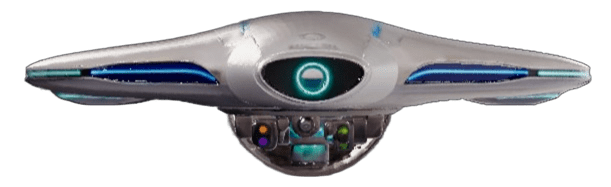
The enclosed ducted-jet design eliminates rotor strike hazards present in traditional drone designs, making the platform safer around personnel and infrastructure.
CHAXU operates as a coordinated network, not individual platforms. Units share intelligence, optimize coverage patterns, and coordinate responses to detected threats.
Fleet coordination enables capabilities impossible with isolated drones: continuous coverage through charging rotation, multi-unit response to incidents, and learning from collective operational experience.
Built-in audit trails, geofencing, configurable rules of engagement, and integration with existing security systems ensure CHAXU operates within regulatory requirements and organizational policies.
The system logs all decisions and actions, providing documentation for compliance audits, incident investigations, and liability protection.
Persistent aerial surveillance eliminates coverage gaps inherent in ground-based security. Earlier threat detection and faster incident response reduce security risks.
Lower total cost of ownership compared to helicopter patrols or expanded guard forces. Autonomous operation reduces staffing requirements while improving coverage.
Fleet size scales to facility requirements. Add units and docking stations as perimeter expands or threat profile changes without fundamental infrastructure changes.
CHAXU integrates with PSIM, VMS, and access control systems already deployed. Enhances existing security infrastructure rather than requiring replacement.
Automated audit trails, geofencing, and configurable rules of engagement help meet regulatory requirements for critical infrastructure protection.
Documented security coverage reduces liability exposure. Real-time incident documentation supports investigations and insurance claims.
Most organizations begin with a structured pilot deployment to evaluate CHAXU performance in their specific environment.
Organizations evaluate CHAXU deployments based on measurable security and operational outcomes.
Refineries, power plants, transmission infrastructure, offshore platforms
Commercial ports, naval facilities, shipyards, harbor security
Large industrial campuses, warehouses, distribution centers, factories
Airports, rail yards, transit facilities, logistics hubs
Federal facilities, municipal infrastructure, border monitoring
Military installations, forward operating bases, classified facilities
Water treatment plants, substations, pumping stations
Extraction sites, processing facilities, remote operations
Request a site assessment and pilot program proposal to determine if autonomous aerial security is appropriate for your facility's requirements.
Contact Sales